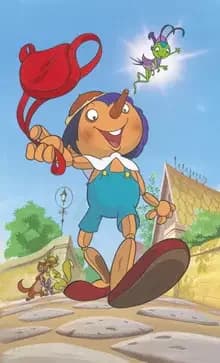
This adaptation of Pinocchio follows the journey of an incredibly gullible, naive, and morally confused wooden puppet who is brought to life by a mystical blue fairy. Pinocchio (Mokku) is portrayed with numerous character flaws that he must overcome to become worthy of being granted humanity. These flaws include selfishness, rudeness, insensitivity, laziness, stubbornness, excessive trustfulness, self-pity, stupidity, disobedience, compulsive lying, arrogance, greed, cowardice, recklessness, cruelty, foolishness, and an inability to learn from his mistakes.
Throughout the series, Pinocchio (Mokku), often due to his own misbehavior and repeated disobedience, endures many costly ordeals of hardship and pain. He is continuously tormented, persecuted, bullied, humiliated, tricked, ridiculed, ostracized, beaten, downtrodden, and subjected to degrading and inhumane treatment. The straightforward depiction of the harsh reality of being literally subhuman while growing up in a dangerous and difficult world makes this another strong example of traditional Japanese storytelling, which teaches moral lessons through tough endurance.