original_creator
Mori, Ougai
- Birthplace
- Tsuwano, Iwami Province (Currently Tsuwano, Shimane Prefecture), Japan
- Gender
- Male
Personal Information
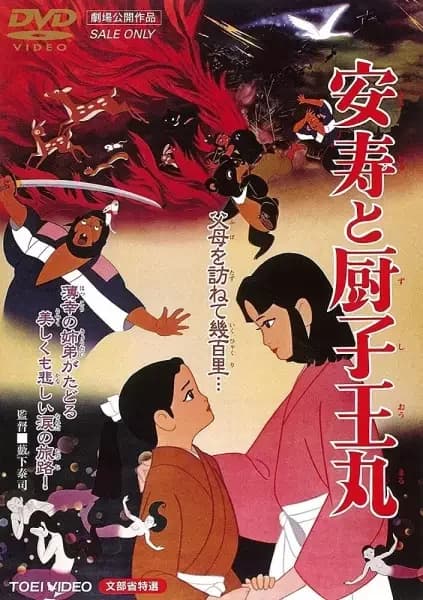
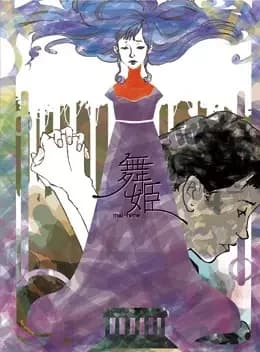
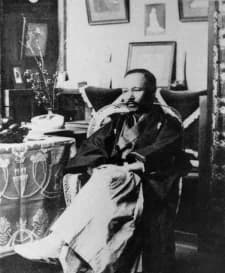
Born Mori Rintarou on February 17, 1862, in Tsuwano, Iwami province (now Shimane prefecture), Mori Ougai was a multifaceted figure who served as a physician, translator, novelist, and poet until his death on July 8, 1922. Hailing from a lineage of hereditary doctors serving the daimyou of the Tsuwano Domain, the eldest son was initially groomed to continue the family tradition through studies in Confucian classics at the domain academy and private instruction in rangaku and Dutch. Following the Meiji Restoration and the abolition of the domains in 1872, the family moved to Tokyo, where Mori resided with Nishi Amane to study German, the dominant language for medical education. He entered the government medical school in 1874, graduating in 1881 at age 19 as the youngest recipient of a medical license in Japan. During these formative years, he also cultivated a deep interest in literature, devouring late-Edo popular novels and studying Chinese poetry. After graduation, Mori joined the Imperial Japanese Army as a medical officer with a focus on military medicine and hygiene. From 1884 to 1888, the Army sent him to study in Germany, visiting Leipzig, Dresden, Munich, and Berlin. This period sparked his passion for European literature and marked him as the first known Japanese rider of the Orient Express. Upon returning, he achieved high rank within the military medical corps, advocating for scientific research and even self-funding a medical journal. Simultaneously, he sought to revitalize modern Japanese literature by publishing the literary journal Shigarami Soushi (1889-1894) and the poetry collection Omokage (1889). Identifying as an "anti-realist," he argued that literature should explore the emotional and spiritual realms, a philosophy evident in his 1890 novel Maihime (The Dancing Girl), which depicts a romance between a Japanese man and a German woman. In 1899, Mori married Akamatsu Toshiko, daughter of Admiral Akamatsu Noriyoshi, a close associate of Nishi Amane. However, the couple divorced the following year under bitter circumstances that permanently severed his friendship with Nishi. While his original writing slowed between 1892 and 1902, he continued editing the journal Mezamashi gusa until 1909 and produced translations of works by Goethe, Schiller, Ibsen, Hans Christian Andersen, and Hauptmann. During the Russo-Japanese War (1904-1905), he began maintaining a poetic diary, and post-war, he hosted tanka writing gatherings featuring poets like Yosano Akiko. His later career is categorized into three distinct phases. Between 1909 and 1912, he focused on fiction drawn from personal experience, including Vita Sexualis and his magnum opus, Gan (The Wild Geese, 1911-13). Set in 1881 Tokyo, Gan was adapted into the 1953 film The Mistress by director Shiro Toyoda. From 1912 to 1916, deeply influenced by the 1912 seppuku of General Nogi Maresuke, he wrote historical tales exploring themes of self-destruction, sacrifice, and patriotism, such as Sanshou Dayuu and Takasebune. Starting in 1916, he shifted his focus to biographies of late Edo period physicians. Recognized as a leading Meiji period writer, Mori established modern literary criticism in Japan through his journals, applying the aesthetic theories of Karl von Hartmann. Two historic residences associated with Mori are preserved today: his birthhouse in Tsuwano and the home in Kokura Kita ward, Kitakyushu, where he wrote the Kokura Nikki. These one-story structures near Kokura station share a similar size and traditional Japanese architectural style. Additionally, his daughter, Mori Mari, later exerted influence on the Yaoi movement in contemporary Japanese literature.