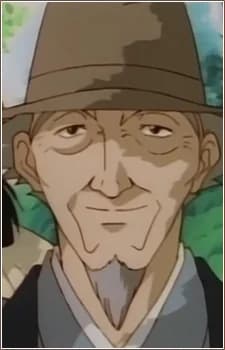
Katsu, Kaishuu
Summary
Katsu Kaishuu serves as a pivotal historical figure and supporting character in Rurouni Kenshin. Born Katsu Rintarou in January 1823 in Edo, now modern-day Tokyo, he was the son of a low-ranking retainer serving the Tokugawa Shogun. His insatiable curiosity about the world beyond Japan’s borders was ignited when he first examined a world map and noticed Dutch inscriptions on a cannon, sparking a fascination with foreign nations. During the turbulent Bakumatsu period, Kaishuu played a crucial role in establishing Japan’s Navy following Commodore Matthew C. Perry’s arrival. He helped shape the ideals of the famous Ishin Shishi member Sakamoto Ryouma, advocating for a military force valued for skill and ability rather than birthright or caste. These efforts propelled Kaishuu up the Shogunate’s ranks and led to the creation of his naval academy. In January 1860, Kaishuu commanded the Kanrin Maru on its maiden voyage, making Japan’s first authorized trans-Pacific journey. Landing in San Francisco Bay, he observed American daily life, which reinforced his vision of Japan as an equal nation. This experience deepened his understanding of the outside world, including the rise of Western colonialism and the plight of conquered peoples. By 1862, amidst escalating Bakumatsu tensions, Kaishuu faced house arrest and the closure of his academy after being caught harboring enemies of the Shogun. Under Tokugawa Iemochi, his innovative suggestions nearly cost him his life, particularly when he advised the Shogun to peacefully relinquish power to suppress violent sonno-joi imperialist rebels. By 1866, as Choshu forces defeated the Shogunate’s armies, Kaishuu was recalled to his position as Navy Commander under Tokugawa Yoshinobu. He was sent to Hiroshima to negotiate with Choshu representatives. After successfully settling agreements, he resigned his post, recognizing that underlying tensions remained irreconcilable. In 1867, even as Yoshinobu stepped down to restore power to the Emperor, the Satcho army continued to combat opponents of the new government. When the Satcho army marched on Edo in 1868 to dismantle the Shogunate by force, Kaishuu’s role as Yoshinobu’s advisor became critical. To prevent a bloody civil war in Edo, he sent a letter to Saigo Takamori in March 1867, arguing that Tokugawa retainers were integral to the new nation and that cooperation was necessary to face the threat of foreign powers watching the revolution. Saigo replied with conditions: Edo Castle would be surrendered to the Satcho army in exchange for sparing the Tokugawa retainers, Yoshinobu, and the city itself. On March 14th, a day before the planned assault, Kaishuu and Saigo met in person and agreed to peaceful terms to save the new capital. Although Kaishuu initially accompanied Yoshinobu into exile in Shizuoka, he returned to Tokyo in 1872. He found employment in the Meiji Government among other Tokugawa retainers, serving as Vice Minister of the Imperial Japanese Navy before being promoted to its first Minister of the Navy from 1873 to 1878.