
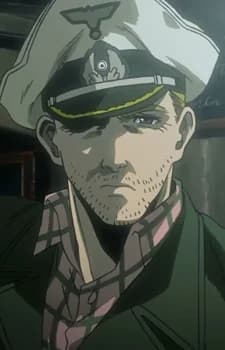
H. Ahbe, Wentzel




Summary
Wentzel Ahbe served as a decorated U-Boat captain in the Kriegsmarine, surviving numerous depth-charge engagements during the Battle of the Atlantic. In March 1945, he commanded U-1324 on a final mission from Kiel, Germany, tasked with transporting Lt. Col. Matsuda to the Japanese base in Batavia, located in the South China Sea. Ahbe also took on SS Lt. Col. Spielberger, who was transporting an undisclosed cargo. The submarine experienced significant luck, encountering few enemies and successfully torpedoing a tanker, but trouble arose near Batavia when it encountered a U.S. Navy patrol group. Forced into silent running, the sub was detected by active sonar and heavily damaged by depth charges, driving it nose-first into the ocean floor. While the forward torpedo crew sacrificed themselves to seal the flooding compartment, escape was impossible. Ahbe then relieved his men of their duties to the Third Reich, allowing them to meet their end on their own terms. During the waiting period, Ahbe encountered Spielberger, noting that Matsuda had already committed seppuku, or ritual suicide. Spielberger, after discussing escape possibilities, revealed he was carrying a painting titled "The Twelve Knights Led by Brunhilda," allegedly created by Adolf Hitler, though it was later discovered to be meaningless. Although Ahbe was a patriot, he was not a Nazi and openly expressed his disgust to Spielberger for prioritizing ideology over thoughts of his family. Offended by Ahbe’s lack of loyalty to the Nazi cause, Spielberger murdered him. Ahbe’s loyal crew subsequently killed Spielberger. Despite Ahbe’s heroic reputation, Revy had no qualms about stealing his Iron Cross with Oak Leaves and Swords, which he had earned during his Atlantic service, seeking it merely for a quick profit.